
Sex Offender Checks in Ware County
The Georgia Bureau of Investigation's public SORT registry is the primary statewide channel. Select Ware in a county search, search a known name, or use an address and radius when the live interface offers that mode. The GBI manages the central registry under O.C.G.A. § 42-1-12 with data supplied by sheriffs and other agencies. That division of responsibility matters: the state site publishes the public entry, while the sheriff of the county of residence performs local registration and receives required changes.
Ware County does not publish a separate verified local registry list in the research source set. Questions about registration, suspected noncompliance, or a discrepancy should therefore go to the Ware County Sheriff's Office at (912) 287-4326. Call before trying to visit a registration counter because its registration address, hours, and appointment procedure were not published on the official pages inspected. A registry result is a lead for awareness and verification, not an invitation to contact the listed person.
Search Ware County Before Narrowing to Waycross
A city-only query can miss relevant addresses. Ware is Georgia's largest county by land area, and a Waycross postal address does not necessarily fall within incorporated Waycross or Waycross Police jurisdiction. Start with Ware County, review the full result list, and then narrow by address or radius. For Manor, the same county-first method is more dependable than assuming a very small city label captures nearby rural addresses.
The GBI registry overview explains the state program and gives context for the search service. The official image below provides a visual reference to that state-managed channel.
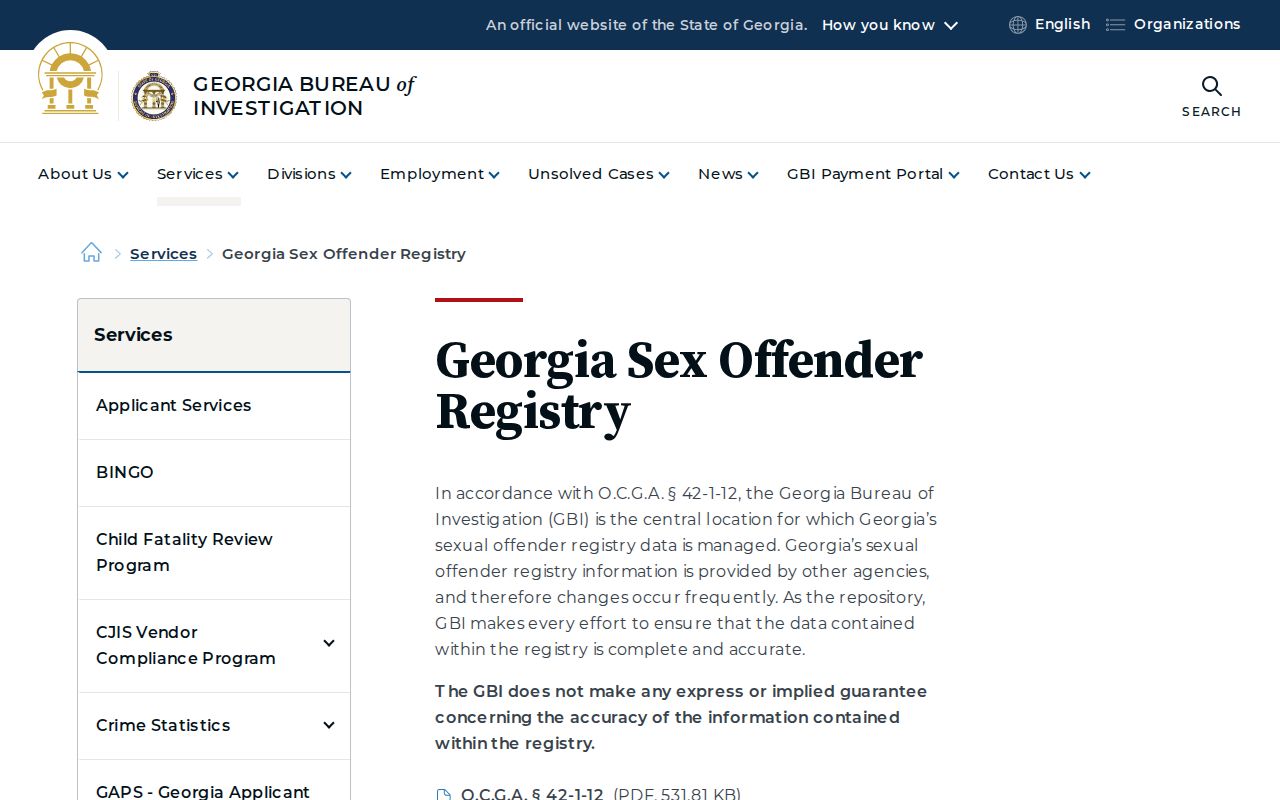
Use the overview for authority and guidance, but use the live SORT search for current public records and confirm material questions with Ware Sheriff.
How to Search the Georgia Sex Offender Registry
The live SORT interface may revise labels or available filters. Its documented modes support identity and geographic queries, map or list presentation, and optional status filtering. A careful four-step search avoids treating a shared name as identity:
- Open the official registry, read and accept its conditions of use, and choose name or geographic search.
- Select Ware County broadly, or enter a name, ZIP, city, or address and radius when the selected mode permits it.
- Review both list and map results, then compare the photograph, aliases, physical description, and address.
- Open the complete profile, read the offense and registration status, and ask Ware Sheriff to verify an urgent discrepancy.
| Field Label | Type | Required | Notes |
|---|---|---|---|
| Last Name | Text | Conditional | Used in name-search mode |
| First Name | Text | No | Narrows a name search |
| Offender Type/Status | Dropdown/filter | No | Live options can vary |
| County | Dropdown | No | Select Ware for the county list |
| City or ZIP Code | Text/dropdown | No | Waycross or Manor may narrow results |
| Address and Radius | Text/dropdown | Conditional | Used for geographic proximity searches |
| Search / Clear | Buttons | Search only | Runs or resets the selected mode |
| Map / List | Controls | No | Changes geographic presentation |
When the National Search Adds Context
The Dru Sjodin National Sex Offender Public Website searches participating jurisdictions through one federal interface. Its assigned image shows the national search layer available when a person may have moved beyond Georgia.
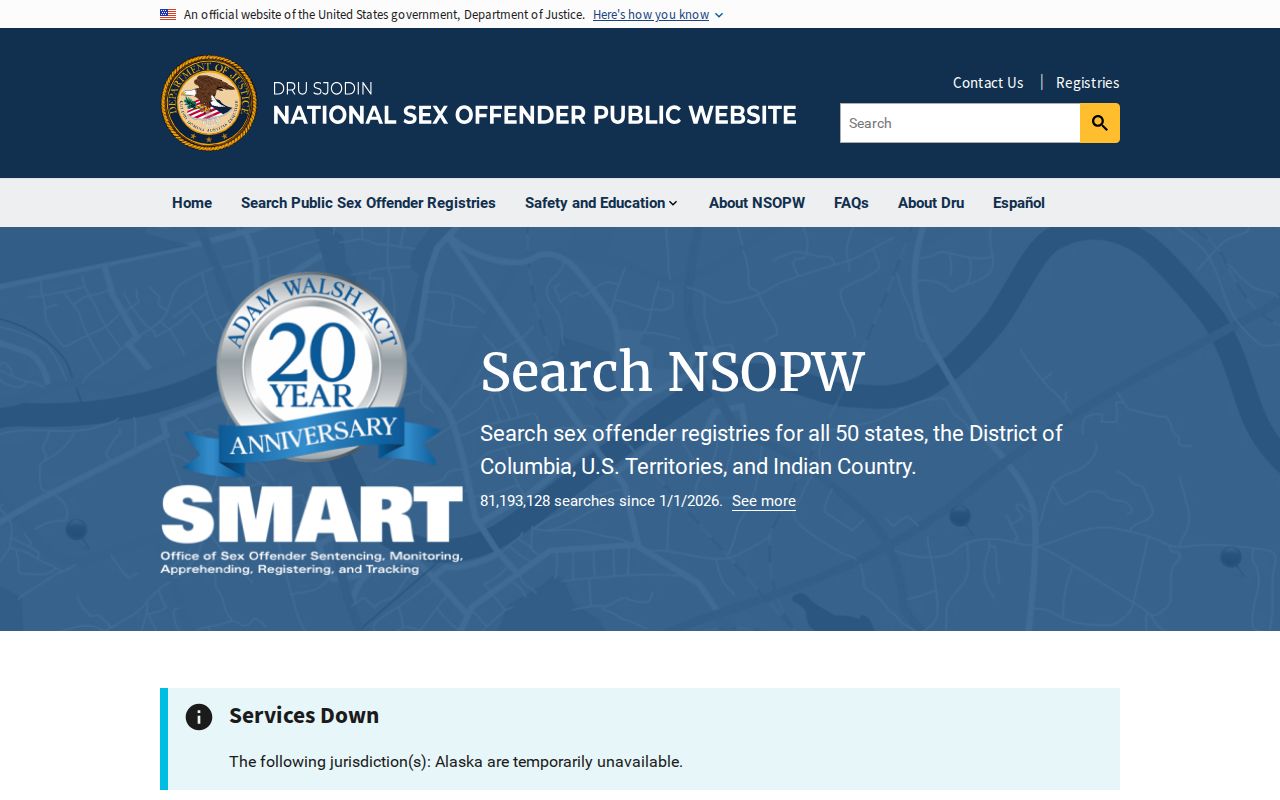
NSOPW broadens geographic reach, but it does not replace the Georgia source record or local confirmation. Open the originating jurisdiction's result and follow that jurisdiction's verification instructions.
Inside a Registry Profile
Public profiles combine identity clues, registration information, and conviction details at the granularity Georgia law authorizes. Not every profile contains every possible field. Agency-supplied information can change, so use several characteristics and never identify someone solely from a name.
| Name & Aliases | Published name and reported aliases used to distinguish similar results. |
|---|---|
| Photo & Physical Description | Photograph plus descriptors such as sex, race, height, weight, hair and eye color; age or birth-date treatment varies. |
| Registered Address | Residence information at the public level authorized by Georgia law, with reporting jurisdiction. |
| Offense & Statute | Offense description, conviction date and jurisdiction, and statute where supplied. |
| Level / Classification | Georgia risk classification or sexually dangerous predator designation when applicable. |
| Registration Status | Verification information and notices such as absconded or noncompliant status where reported. |
Scars, marks, tattoos, vehicles, school, or work information may also appear when collected and legally public. Registry presence describes a statutory registration duty arising from an earlier qualifying matter; it does not show that the person committed a new offense.
Why a Current Address Still Needs Verification
GBI warns that registry information changes frequently and does not guarantee completeness or accuracy. The practical response is not to ignore the official record, but to distinguish the repository entry from local reporting activity. If a map pin seems wrong, a profile appears stale, or a listed status raises an immediate concern, note the profile details and contact Ware Sheriff or GBI. Never investigate by entering private property or approaching a household.
The GBI criminal-history access and restriction FAQ helps distinguish registry data from ordinary criminal-history products. The page image below reinforces that the two systems serve different legal purposes.
A Georgia Felon Search or personal GCIC history is not a substitute for SORT, and a registry profile is not a complete court file. For the signed conviction record, use the court that entered judgment.
Georgia Registration Levels and Requirements
Georgia's terms must not be converted into a generic federal Tier I, II, and III duration chart. Registration duty and duration depend on the offense, conviction date, classification, and controlling version of Georgia law. The Sexual Offender Registration Review Board may classify a person as Level I, Level II, or sexually dangerous predator for risk and community-notification purposes, while the underlying duty and its length follow the statutes applicable to that person.
| Georgia Concept | Duration | Verification / Meaning |
|---|---|---|
| Registered sexual offender | Often life; limited petition routes may apply | Subject to § 42-1-12 reporting as applicable |
| Level I risk | Not a federal-tier duration | Review Board risk classification |
| Level II risk | Not a federal-tier duration | Higher assessed risk; consequences vary by law |
| Sexually dangerous predator | Governed by applicable Georgia law | Statutory designation with enhanced requirements |
The county sheriff is the local registration authority. Required address changes and verification occur as the governing statute directs. Because conviction-era rules and exceptions matter, broad statements such as “every person reports on the same schedule” are unreliable.
Residence Rules Depend on Dates and Exceptions
Georgia law includes residence, employment, and volunteer restrictions for covered registrants around protected locations. Applicability can turn on conviction date, statutory version, and exceptions. O.C.G.A. §§ 42-1-12, 42-1-15, and 42-1-16 are the relevant starting points, but a map distance alone cannot answer every legal question. Readers resolving their own duty should obtain advice based on the current statute and their case rather than relying on a universal distance claim.
The live Georgia SORT portal is the proper place to inspect current public search controls. Its assigned image depicts the actual state search channel.
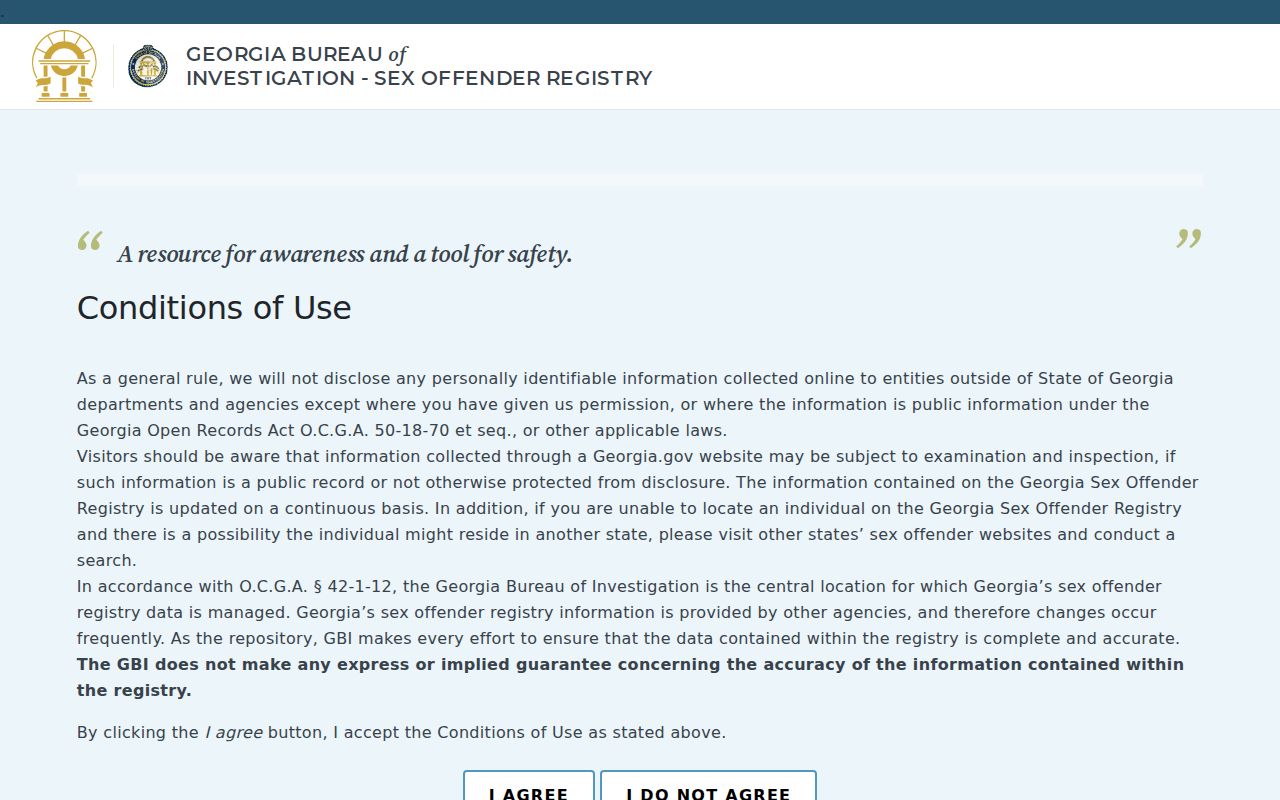
Map results assist community awareness; they do not determine property boundaries, jurisdiction, or a person's legal compliance without official review.
Community Notification and Lawful Use
Registry information supports personal and family safety planning and informed community awareness. Compare profiles carefully, keep uncertainty in view, and report suspected registration violations to Ware Sheriff or GBI. Call 911 for an emergency. Neither SORT nor NSOPW authorizes confrontation, surveillance, trespass, or public accusations based on a partial match.
A sound safety review records the date of the search, opens the complete profile, and distinguishes a registered residence from a map pin interpreted without context. If a household is planning around a school, park, or other protected location, the registry can identify public entries nearby, but only the responsible authorities can determine whether a particular statutory restriction applies. Community notification is meant to support measured precautions and official reporting, not informal enforcement.
When a person cannot be located in Ware results, repeat the search with aliases and name variations, then use NSOPW to check participating jurisdictions outside Georgia. An empty result can reflect search criteria, an address update, a jurisdiction change, or the absence of a public entry. It should not be converted into either an accusation or a guarantee. Save the official profile URL or identifying details before contacting the sheriff so staff can understand which record prompted the question.
Use registry records responsibly: Do not harass, threaten, intimidate, discriminate unlawfully, trespass, or take vigilante action against a registrant or household. Verify a match with official identifiers and send compliance concerns to law enforcement.