
Checking Criminal History in Ware County
No single Ware County portal contains every criminal record. Start with the event and its likely custodian. The Ware County Sheriff’s Office handles sheriff reports, jail bookings, and warrant-service questions. The Ware Clerk holds Superior Court felony files and State Court misdemeanor files. Waycross Police keeps its own city reports, while Waycross Municipal Court maintains city ordinance and many traffic matters.
Gather the full legal name, spelling variants, event date, location, and any report, booking, warrant, citation, or case number. A case number is more exact than a name. Keep each identifier separate because the jail, police, and courts assign different numbers.
- Decide whether the needed fact concerns an arrest, local custody, a filed case, or a statewide self-review.
- Identify the arresting agency and court from a citation, bond sheet, or release paper.
- Request the docket first for a court matter, then select the signed disposition or sentence.
- Compare booking charges with the later accusation, indictment, or judgment.
- Ask for a certified Ware County disposition when formal proof of the outcome is needed.
Ware Sheriff, Clerk, GCIC, GDC
Four record layers answer four different questions. The Ware sheriff documents local law-enforcement and jail activity. The clerk documents what a Ware County court filed and decided. GCIC links reported Georgia arrest and disposition cycles. GDC covers people in state correctional custody or its offender system. Searching the wrong layer can produce a true result that still does not answer the question.
| Channel | Best use | Key limit |
|---|---|---|
| Ware Sheriff | Reports, bookings, custody, warrant routing | Not a certified court outcome |
| Ware Clerk | Dockets, charges, orders, dispositions | Ware-filed cases only |
| GCIC | Personal Georgia history and corrections | Depends on linked agency reporting |
| GDC | State-sentenced offender status | Not the county pretrial jail roster |
The official sheriff homepage and jail-population entry shows where the local custody search begins.
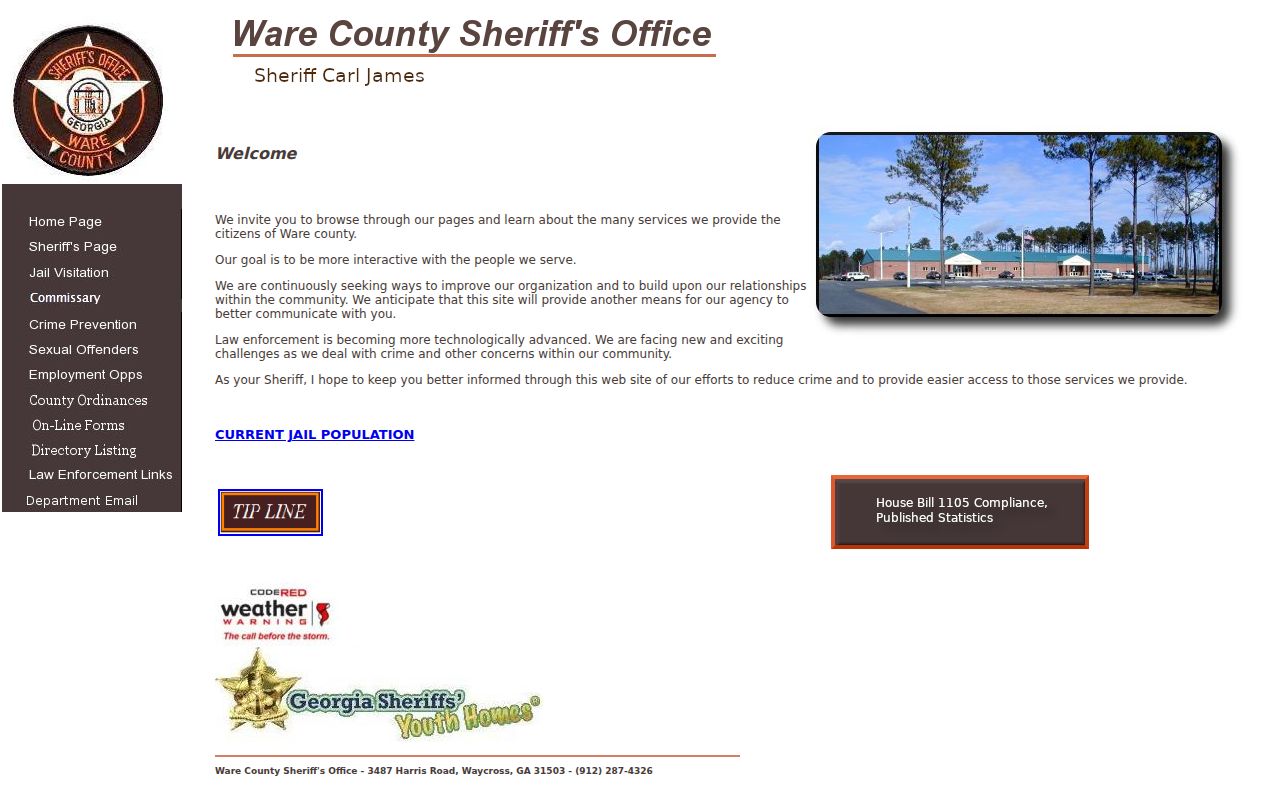
That county channel should be paired with court records whenever the final charge or disposition matters.
Georgia Official Background Checks
The Georgia Bureau of Investigation’s Georgia Crime Information Center maintains the state criminal-history repository. A person reviewing their own Georgia record can ask a participating sheriff or police department about local access or arrange an appointment with the GCIC Lobby. Fingerprint-supported inspection is more reliable for identity than a public name search. The GCIC Lobby schedules appointments at 404-244-2639, option 1, and does not offer same-day appointments.
Georgia Felon Search is open to the public but narrow. It returns possible Georgia felony-conviction matches from a first name, last name, date of birth, and sex. It excludes misdemeanors, juvenile history, and sealed or restricted data. A valid credit card is required, with the current price shown in the live workflow. Only fingerprints can confirm identity.
The GCIC criminal-history access page describes personal inspection, record content, and correction channels.
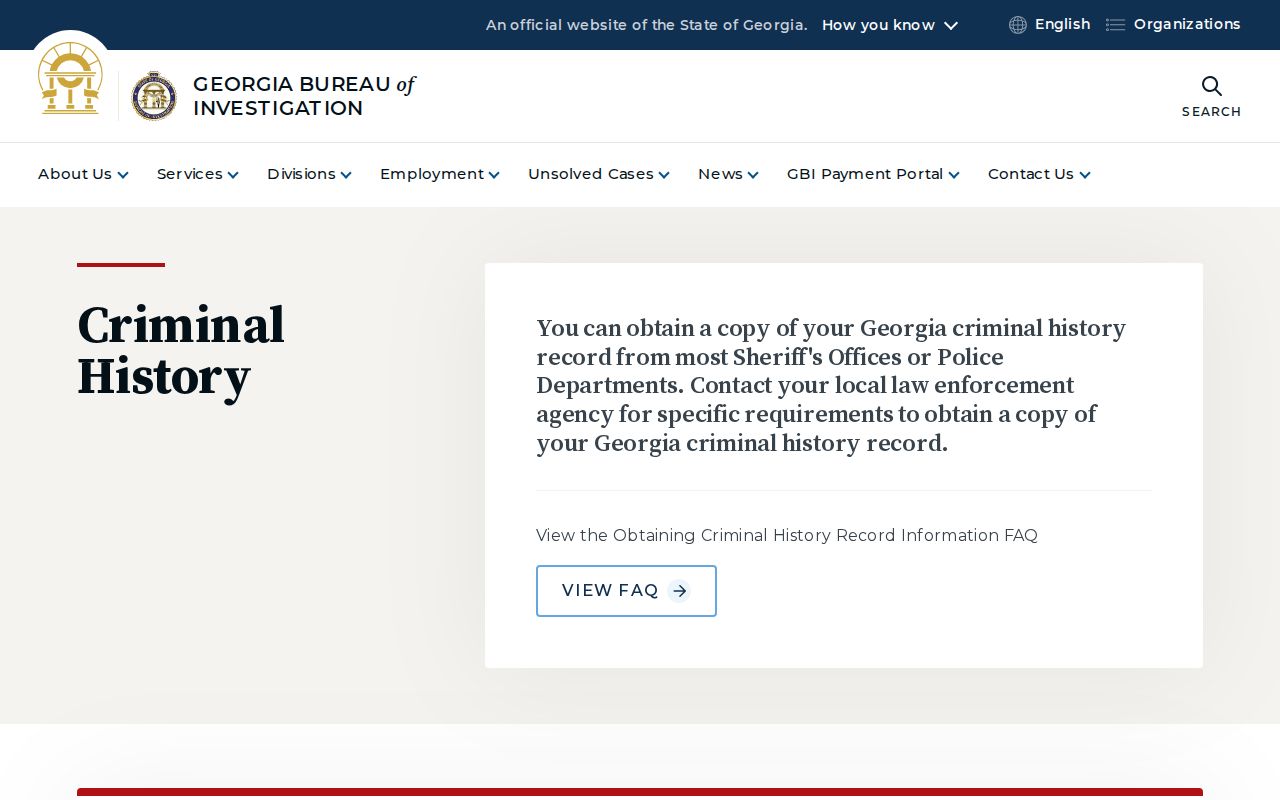
GCIC data can connect arrest, court, and custody events, but a certified Ware County court order remains the clearest source for a local disposition.
Ware Felon Search Match Limits
Georgia Felon Search can be useful when the question is limited to possible Georgia felony convictions. It is not a full Ware County criminal record search. A blank result says nothing definite about misdemeanors, recent cases, restricted files, juvenile matters, or local records not represented by that product.
| Field | Format | Required |
|---|---|---|
| First name | Legal first name | Yes |
| Last name | Legal last name | Yes |
| Date of birth | Exact date | Yes |
| Sex | Portal selection | Yes |
| Payment card | Secure checkout | Yes |
The official Georgia Felon Search instructions explain the possible-match warning and fingerprint limitation.
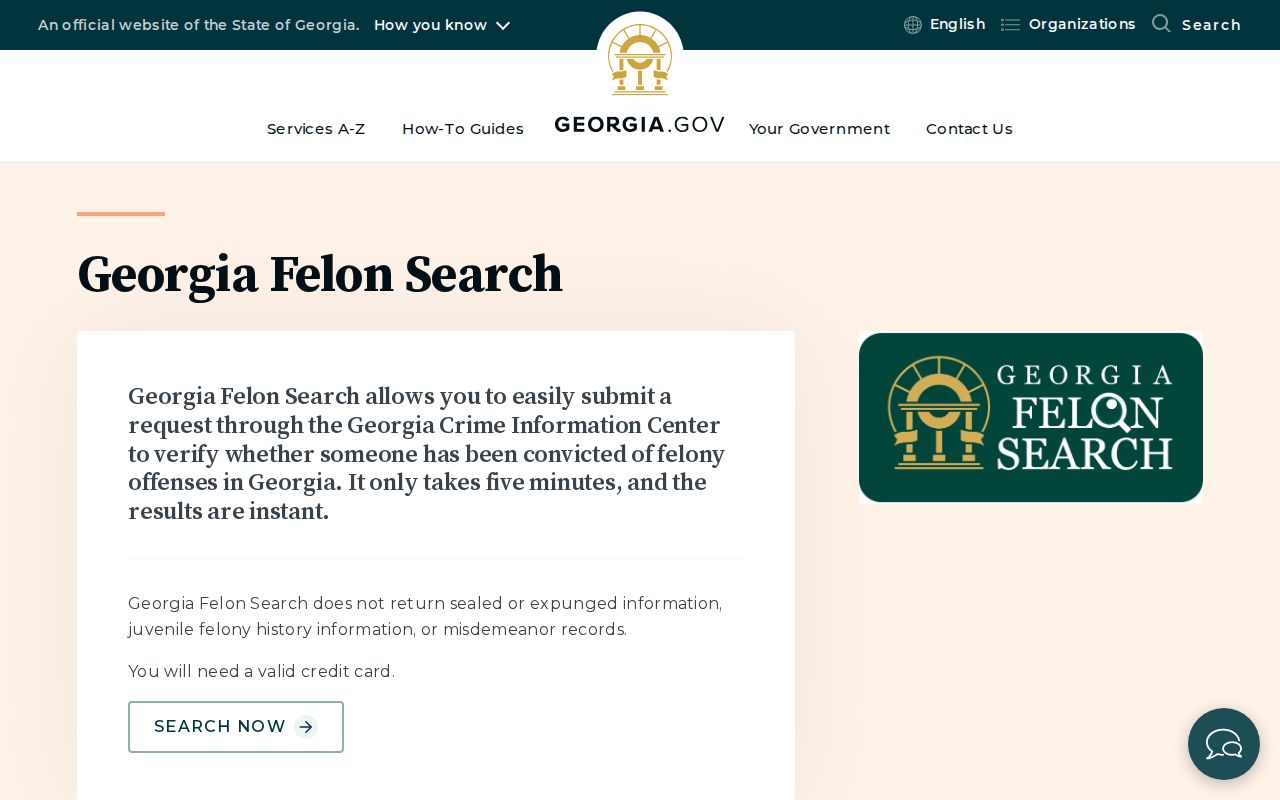
Use any match as a lead, then verify identity and outcome through fingerprints or the court that entered the judgment.
Criminal Record Types
Ware County criminal records differ by creator, purpose, and legal weight. An incident report can exist without an arrest. A booking record reflects jail intake. A court file tracks formal prosecution and disposition. GCIC compiles reported identity-linked events, while GDC maintains state correctional data.
- Incident and arrest reports: held by Ware Sheriff, Waycross Police, or the other investigating agency.
- Booking records: created at Ware County Jail with intake charges, custody, and bond data.
- Court files: contain accusations, indictments, motions, pleas, judgments, and sentences.
- Warrants: issued through a court, with some active details withheld for safety or investigative reasons.
- State records: GCIC histories, GDC offender entries, supervision records, and registry profiles serve distinct roles.
Probation and parole also split by authority. The Georgia Department of Community Supervision handles adult felony supervision, while the Georgia State Board of Pardons and Paroles makes parole decisions. Court records identify the sentence and supervising entity.
Ware Jail Versus State Prison
Ware County Jail and Ware State Prison sit in the Harris Road corrections area, but they are not the same institution. The county jail holds local pretrial detainees and other people in county custody. Ware State Prison is a Georgia Department of Corrections close-security prison for adult men serving state felony sentences.
For a person thought to be in recent local custody, call the sheriff at (912) 287-4326 or use its current-jail-population entry. After a state sentence or transfer, search GDC Find an Offender. Its fields include GDC ID, case number, name, gender, race, age, and most recent institution.
The official GDC offender form illustrates the state-custody search layer.
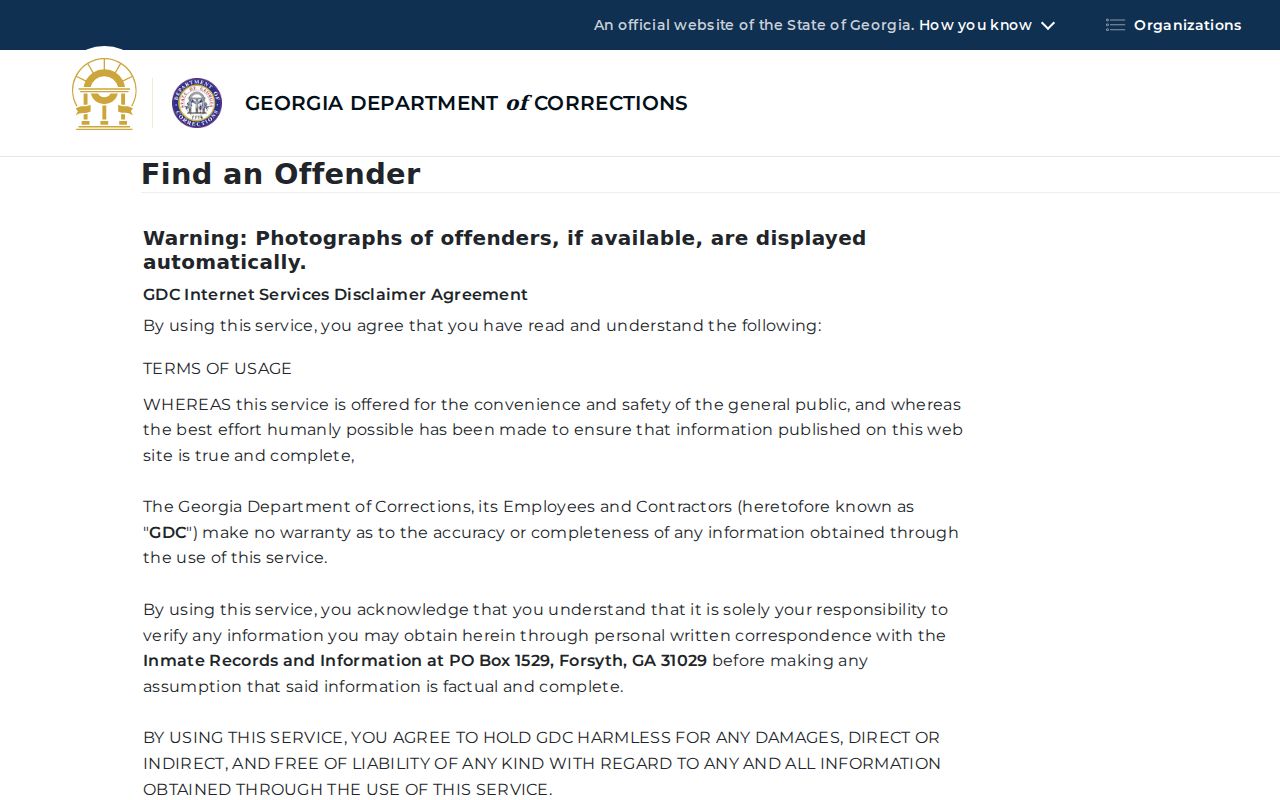
A GDC result does not replace the Ware jail record or the certified court judgment that led to state custody.
Inside a Ware County Criminal Record
A record’s fields reflect its source. Jail data emphasizes intake and release. Court files emphasize formal charges, docket events, and final orders. GCIC organizes linked arrest cycles using identity and transaction data. Sensitive details may be redacted from public copies.
| Name & Identifiers | Name variants and basic descriptors; public products suppress sensitive identifiers. |
|---|---|
| Arrest / Booking Data | Agency, date, booking number, intake charge, bond, and custody status. |
| Charges & Statutes | Count, offense text, code section, and later amendments. |
| Disposition | Plea, verdict, dismissal, nolle prosequi, or other signed outcome. |
| Sentence | Confinement, probation, fines, restitution, and public special conditions. |
| Custody / Supervision | Jail, GDC, release, probation, or parole information from the proper agency. |
Note: A missing disposition in GCIC calls for verification with the Ware Clerk and contributing agency, not an assumption about guilt or dismissal.
Ware Booking to GCIC
The record chain begins when an arresting agency documents an event. At booking, the jail creates a number, records intake charges, takes a photograph, and normally captures fingerprints. Those fingerprints support transmission into GCIC’s Computerized Criminal History system. The prosecutor may later file different charges, and the court reports the final result.
Arrest → booking and fingerprints → prosecutor filing → court disposition → GCIC update
GCIC’s Offender Based Tracking System seeks to link these stages. Gaps can arise when fingerprints were not submitted, identifiers differ, or the court result has not linked to the arrest cycle. Compare the arresting agency’s file with the Ware court docket before treating an intake label as the final offense.
Public Access Laws in Georgia
The Georgia Open Records Act governs records held by agencies. It requires a response within three business days when records are available. If production cannot occur then, the agency must provide a description and timetable. That is a response deadline, not a promise that every large request will arrive in three days. Court records also follow judicial access rules and sealing orders.
Key Statutes:
O.C.G.A. § 50-18-70 creates the public-record presumption and definitions.
O.C.G.A. § 50-18-71 governs inspection, production, timing, and fees.
O.C.G.A. § 50-18-72 protects exempt material and supports redaction.
O.C.G.A. § 35-3-34 governs criminal-history dissemination.
O.C.G.A. § 35-3-37 covers review, correction, and record restriction.
Pending investigations, juvenile material, medical data, confidential sources, and protected victim information can be withheld. Public portions should be separated and produced when possible.
Ware Records Request Costs
A request needs no special phrase. Describe an existing record by type, event date, location, agency number, and involved names. Ask for electronic delivery when useful. An agency does not have to create a new report or answer questions that are not requests for records.
| Item | Georgia rule |
|---|---|
| Search and retrieval | Lowest-paid qualified employee’s hourly rate after the first 15 minutes |
| Standard paper copy | Generally no more than $0.25 per page unless another law applies |
| Large request | Estimate and qualifying prepayment may be required |
| Certified court copy | Ask the Ware Clerk for the current charge |
Start Ware sheriff requests with the records custodian at 3487 Harris Road, Waycross, GA 31503, (912) 287-4326. For felony or misdemeanor case documents, use the Ware County Clerk of Court and identify the court division.
Sealed, Expunged, and Restricted Records
Georgia uses the term record restriction. Under O.C.G.A. § 35-3-37, eligible arrest information is limited from general public access in GCIC. It is not destroyed. Criminal-justice agencies and certain authorized users may retain access.
Eligibility turns on the arrest date, outcome, offense, and later history. Post-July 1, 2013 cases often move through the prosecutor’s disposition-reporting process. Older arrests commonly require an application to the arresting agency and prosecutor. Court sealing is a separate step, and First Offender Act treatment follows its own rules.
- Correction
- Fixing inaccurate or missing data with source documents.
- Restriction
- Limiting eligible GCIC arrest data from general public access.
- Sealing
- A court order limiting access to eligible court records.
- First Offender
- Conditional treatment that can end without an adjudication of guilt after successful completion.
Use the GCIC inspection and restriction guidance to distinguish these remedies.
Obtain a personal GCIC record and a certified Ware disposition before choosing the correct path.
Ware Supervision Records Split
A sentence can create records outside the clerk and jail. The Georgia Department of Community Supervision supervises adult felony probation and parole in the community. The Georgia State Board of Pardons and Paroles makes parole decisions. County or municipal misdemeanor probation can use a different local or contract provider, so the signed sentence should identify the supervising entity.
The official DCS resource shows the agency responsible for Georgia felony community supervision.
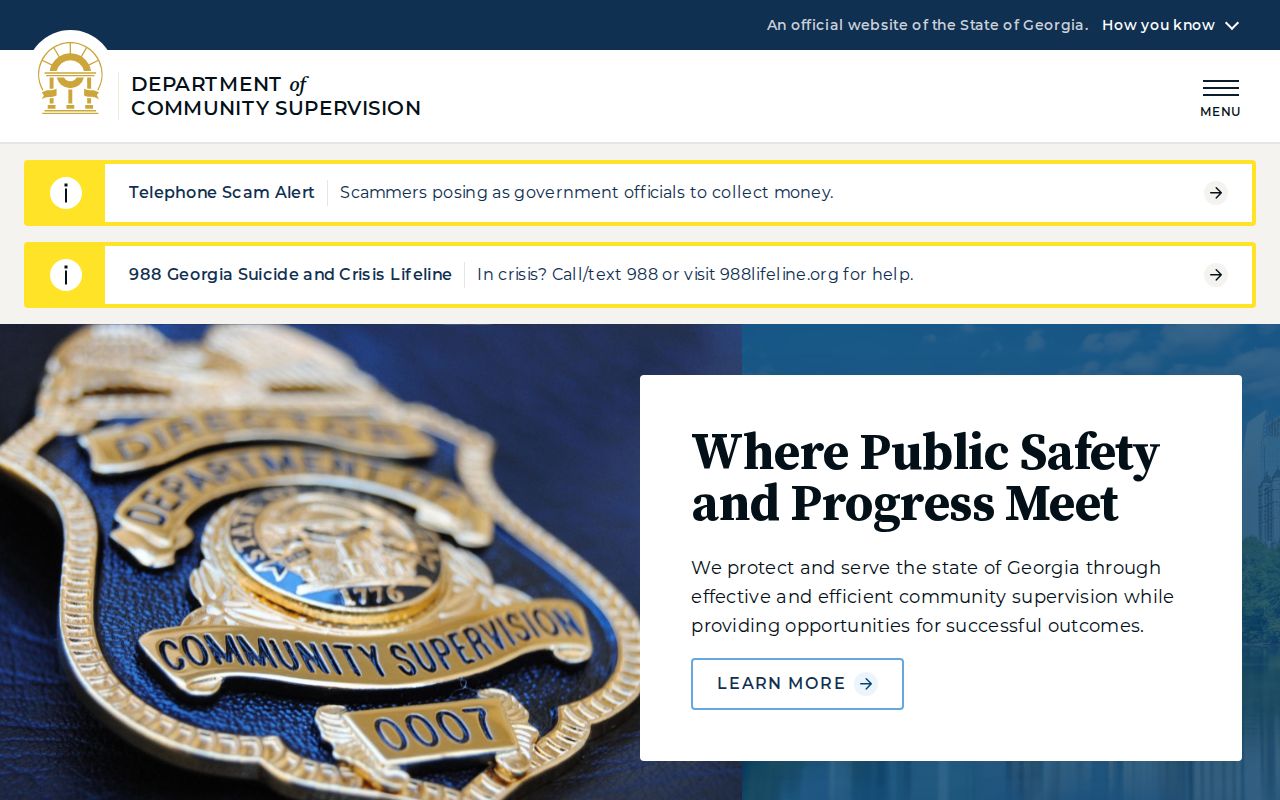
For a Ware County record check, DCS information supplements rather than replaces the conviction and sentence filed by the court.
The Georgia parole authority maintains the separate decision-making channel.
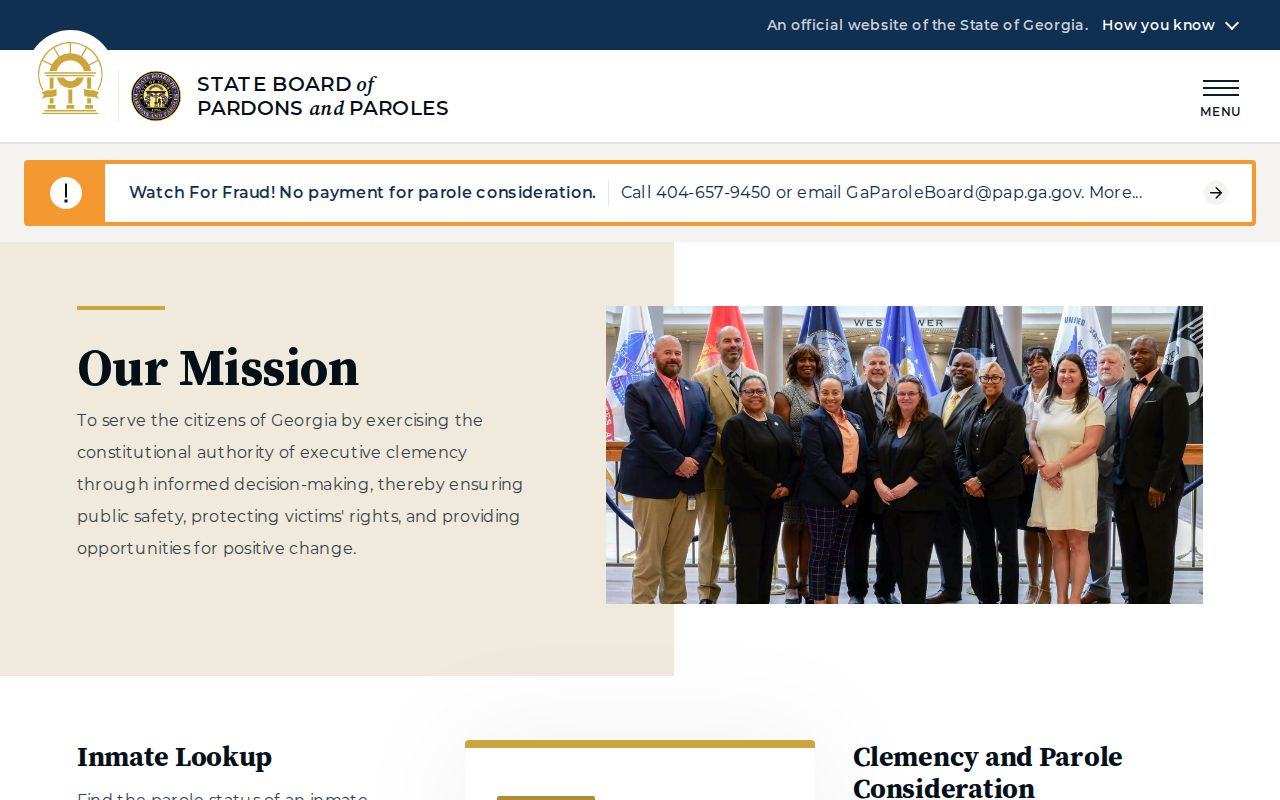
Reading both sources prevents confusion between a parole decision and the agency that performs day-to-day supervision.
Ware Cases Missing Online
Mandatory e-filing in Ware Superior and State Courts does not mean that every docket or document is freely searchable online. Older paper files may need archive retrieval. A service-provider index may show metadata without the signed image. The Ware Clerk remains the authoritative source for local filed documents and certified copies.
If a name search fails, try spelling variants and a narrower filing year. Confirm whether the matter belongs in Superior, State, Magistrate, Juvenile, or Waycross Municipal Court. Ask for the docket or register first. Then request the accusation or indictment, plea, dismissal, nolle prosequi, sentence, or certified disposition shown there.
Note: An empty search may reflect the wrong court, an older file, delayed indexing, or lawful restriction; it does not prove that no record exists.
Ware County Criminal Records by City
Ware County has two incorporated municipalities. Waycross is the county seat and has its own police and municipal court channels. Manor has no verified standalone police-record portal or municipal case search, so county and state routes carry most searches. Postal “Waycross” alone does not establish that Waycross Police handled an event. Confirm the responding agency from paperwork or the exact location.
Waycross Criminal Records
13,942 residents in 2020 · Police reports, municipal matters, county booking, and Ware court routes.
Manor Criminal Records
Under 100 residents in 2020 · Start with the responding agency, Ware Sheriff, and Ware courts.
Waycross Police reports and Ware County Jail bookings remain separate records even when both arise from one arrest. A Manor event likewise should be routed by the agency named on the report or citation, not by the mailing address alone.