
Ware County Criminal Court Cases
Ware County court records are divided by jurisdiction. Superior Court hears felony prosecutions, including indictments, pleas, trials, sentences, and probation revocations. State Court generally handles misdemeanors and traffic matters assigned under Georgia law. Magistrate Court deals with warrant applications, early criminal proceedings, and some county ordinance work. Waycross Municipal Court keeps city ordinance and many citation files. Juvenile Court records receive special confidentiality protection.
The office named on the paperwork matters. A circuit label does not turn the six-county Waycross Judicial Circuit into one records warehouse. The Ware clerk keeps cases filed in Ware County. A requester should preserve the court name, case number, defendant spelling, and filing year from a bond paper, citation, or notice. Those details prevent a search of the wrong division.
Start With Ware Clerk Records
The Ware County Clerk of Superior Court is the authoritative route for a certified felony or State Court disposition. Contact the clerk through the official Ware County Clerk page and ask for the name or case-number index, then the docket sheet. The courthouse is commonly identified at 800 Church Street, Waycross, GA 31501, but the research directs visitors to confirm the exact counter and current hours before traveling.
Ware County Clerk
Superior and State Court criminal files
800 Church Street
Waycross, GA 31501
Confirm the department phone and hours online
The docket is a map, not always the proof needed. After reviewing it, request the accusation or indictment, plea, sentence, dismissal, nolle prosequi order, or certified disposition. Certification means the clerk formally attests that the copy comes from the court record. Ask about copy costs, electronic delivery, and archive retrieval because no fixed local fee or guaranteed retrieval time was verified.
Searching Ware County Case Records
Georgia has no single complete and free statewide criminal-case database. The Georgia Courts directory helps identify the court, and the state lists Ware Superior and State Courts as mandatory e-filing courts. E-filing governs how lawyers submit papers. It does not promise a public name search or free document images.
- Identify the court from the citation, bond paper, charging instrument, or hearing notice.
- Use the case number when available. Otherwise give the full name, spelling variants, and an approximate filing year.
- Ask the clerk for the index result and docket sheet before ordering a large file.
- Select the filed charge and signed outcome document, then request certification if formal proof is needed.
- Call or visit the clerk when an older case, sealed entry, or image does not appear online.
The following fields reflect Ware County’s documented court-search route. Not every interface displays each filter, so a clerk may take the same details by phone or at the counter.
| Search input | Use | Notes |
|---|---|---|
| Case number | Preferred | Retain punctuation supplied by the court |
| Defendant name | Alternative | Try legal spelling and known variants |
| Court or division | Required | Superior, State, Magistrate, or Municipal |
| Filing year | Optional | Useful for common names and archives |
| Case type or status | Optional | Use when the portal or clerk offers it |
Ware E-Filing Is Not Search
The official Georgia e-filing list confirms electronic filing for Ware Superior and State Courts. That status is often misunderstood. PeachCourt and related service-provider screens may require an account, may charge for documents or service, and may expose only metadata for some matters. Older paper files may also need clerk retrieval.
An empty online result does not prove that no Ware County criminal case exists. The name may differ, the case may sit in another court, the filing may predate the online index, or access may be restricted. Call the clerk and ask which archive holds the file. For a Waycross citation, check Municipal Court separately rather than assuming it moved to Superior Court.
Note: Mandatory electronic filing describes lawyer submission, not universal free public access to every Ware County court image.
Inside a Ware County Case File
A Ware County court file follows the prosecution rather than jail intake. The charging instrument shows what the prosecutor filed. Later amendments may differ from both the first booking label and the final count. Docket events can show arraignment, motions, hearings, plea or trial, judgment, and sentence. Public access may omit protected identifiers, victim-sensitive material, juvenile information, medical data, and sealed filings.
| Case identity | Court, case number, filing date, judge, status, and State-versus-defendant caption |
|---|---|
| Filed charges | Accusation or indictment counts, statutes, descriptions, and later amendments |
| Docket events | Warrant returns, bond orders, arraignment, motions, calendars, plea, trial, and judgment |
| Disposition | Dismissal, nolle prosequi, plea, verdict, sentence, probation, or revocation |
| Financial terms | Fines, costs, surcharges, and restitution when publicly docketed |
| Documents | Availability varies; restrictions and redactions can limit inspection |
A certified disposition usually gives the clearest official answer about the outcome. A docket line can lag until the signed order is filed, and a booking record cannot replace it. The broader Ware County arrest lookup can help locate intake information, but the clerk’s case file controls what the court did.
Which Ware Court Holds It?
The charge level and location route the file. Superior Court handles Ware felony prosecutions. State Court generally receives misdemeanors and traffic cases outside a municipal assignment. Magistrate Court can hold warrant-application and preliminary records. Waycross Municipal Court holds city ordinances and many citations, while Juvenile Court limits public access to delinquency records.
| Court | Typical Ware matter | Best request |
|---|---|---|
| Superior Court | Felony prosecution and revocation | Docket, indictment, signed disposition |
| State Court | Misdemeanor and assigned traffic case | Accusation, plea, judgment, sentence |
| Magistrate Court | Warrant and preliminary function | Application or early-stage record, if public |
| Waycross Municipal | City ordinance and many citations | Citation number, name, and date |
Preserve the exact court printed on the paperwork. A Waycross mailing address can fall outside city police jurisdiction, and a city arrest can later become a state misdemeanor or felony. When unsure, ask the Ware clerk to check more than one division.
How a Criminal Case Moves
A Ware County case commonly follows this sequence:
Charges Filed → Arraignment → Pretrial → Plea or Trial → Disposition → Sentencing
The prosecutor’s filing can change an intake charge. Arraignment records the response to the filed accusation or indictment. Pretrial motions and orders address legal and evidentiary issues. A plea or trial resolves the disputed charges, followed by a judgment and, when applicable, a sentence. Dismissal or nolle prosequi can end a count without a conviction. Nolle prosequi means the prosecutor formally declines to continue that charge at that time.
- Accusation
- A formal charging document often used for State Court matters and some felony prosecutions.
- Indictment
- A grand jury charging document that states felony counts.
- Nolle prosequi
- A filed decision not to prosecute a count further at that point.
- Disposition
- The recorded outcome, such as plea, verdict, dismissal, or nolle prosequi.
Older Ware Files Need Retrieval
Ware County’s modern e-filing system does not turn every older paper case into an online image. Historical or closed files may be held offsite or require staff retrieval. Give the clerk a narrow filing range, the full name, and any old case number. Ask whether the response is an index entry, an uncertified image, or a certified court copy.
When no result appears, test several explanations before drawing a conclusion. The case may use another spelling, belong to another Ware court, predate the searchable range, or be lawfully sealed. A disposition may also be filed under a case number that differs from the booking number. These identifiers belong to separate systems.
Case Record Access & Restrictions
Georgia court files are generally open, but access is not unlimited. Juvenile material, protected victim information, medical details, full personal identifiers, and sealed records may be withheld or redacted. The Georgia Open Records Act governs agency records, while court access also depends on judicial rules and sealing orders. A request for filed court papers should go to the clerk, not as a demand that the clerk answer questions.
Record restriction under O.C.G.A. § 35-3-37 limits eligible GCIC arrest history. Court-file sealing is a separate process and requires the applicable court action.
A restricted GCIC cycle does not by itself erase every clerk entry. Conversely, a sealed filing may not correct an incomplete state criminal-history cycle. For a mismatch, obtain the certified Ware disposition, identify the arresting agency and court, and use the GCIC inspection or correction route. Access rules protect records for sound reasons, so absence from a public screen should not be treated as proof of either guilt or no record.
Federal Cases From Ware County
A federal prosecution arising in Ware County belongs to the U.S. District Court for the Southern District of Georgia, not the Ware clerk. The official PACER service provides federal docket access with an account and judiciary fees. Search by court, case number, party, filing date, or status where offered. Sealed documents and protected identifiers remain unavailable.
The Waycross Judicial Circuit page illustrates the state circuit structure.
The circuit page helps identify state-court geography, but Ware-filed records remain with the Ware clerk.
PACER is the official route for a federal docket.
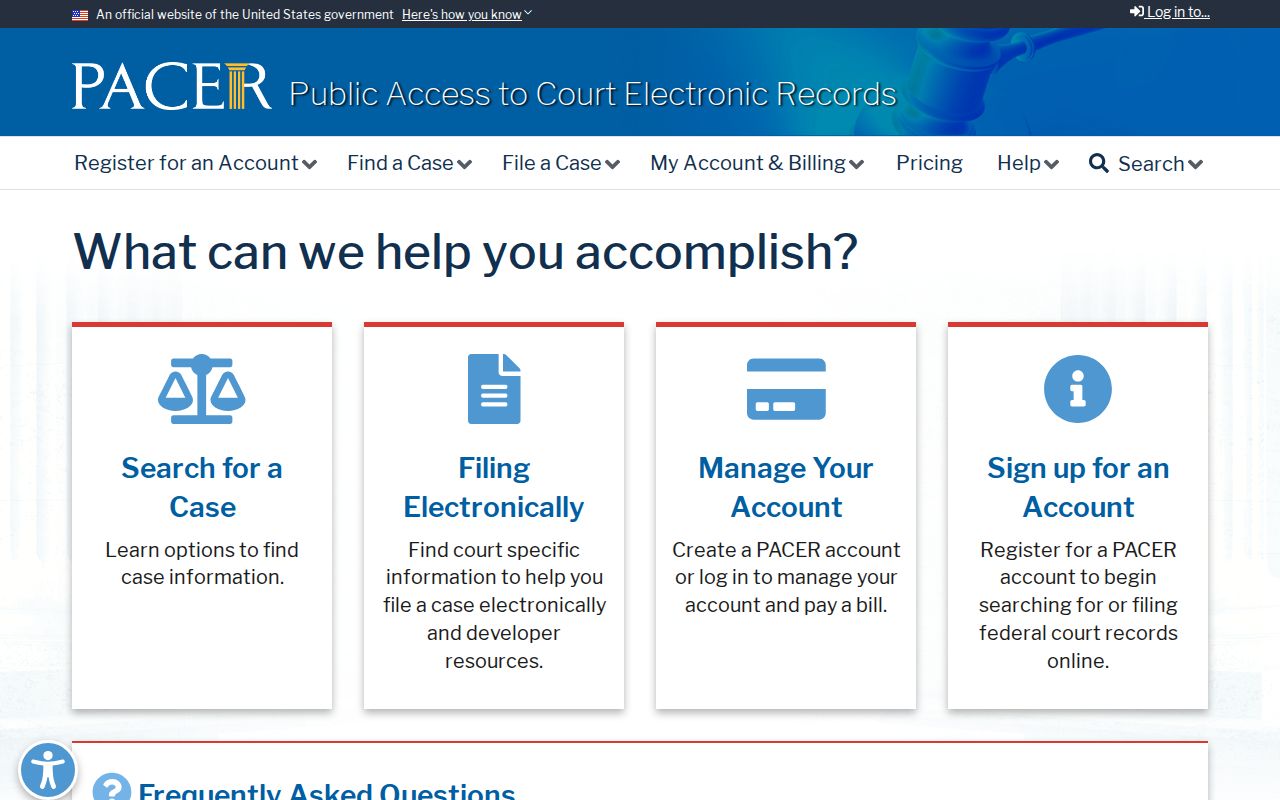
The PACER image reinforces that federal and county case searches use different custodians.
The Southern District of Georgia supplies courthouse and court information.
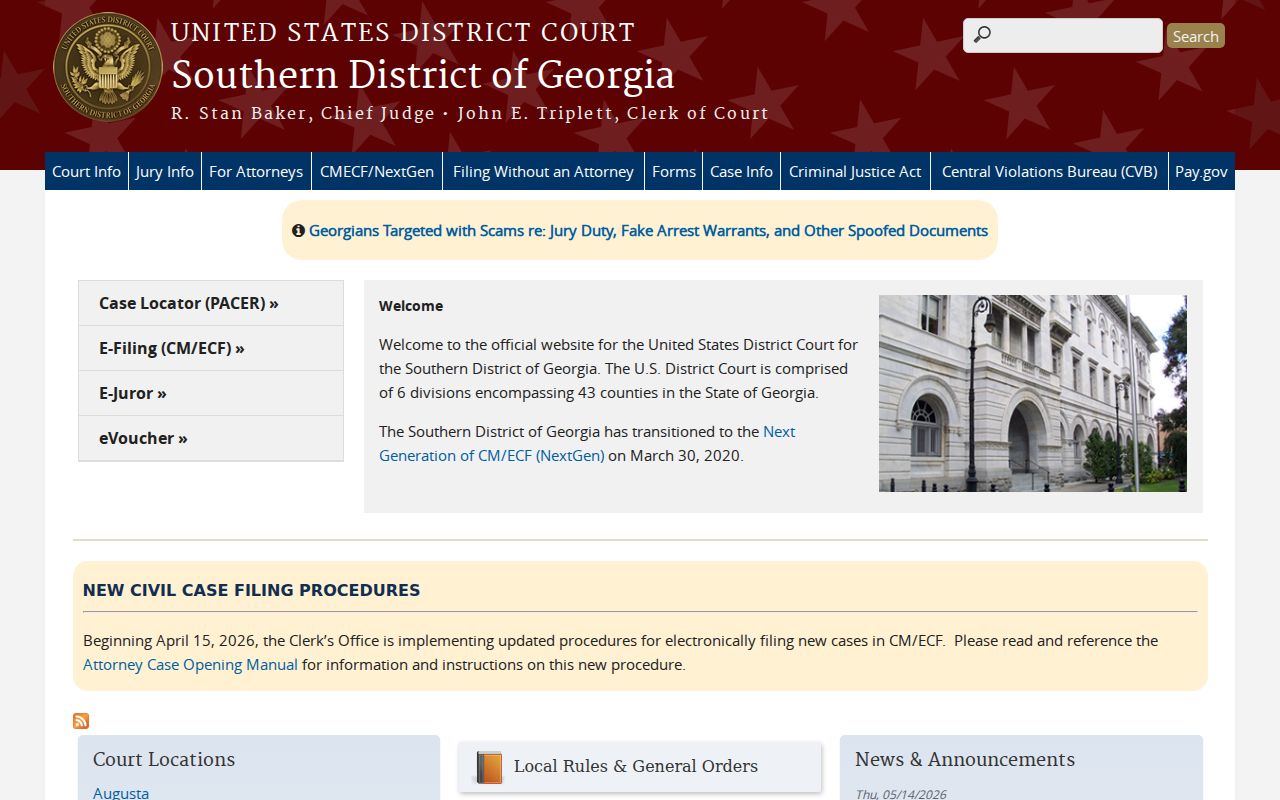
Use that federal court source when the case caption identifies the United States, not the State of Georgia.